
Building a recurring revenue stream no longer requires buying expensive server hardware or hiring a team of system administrators. For modern digital agencies and freelancers, the most lucrative path to scaling revenue is launching a turnkey business through white label reseller hosting.
With zero capital expense, you can purchase enterprise-grade hosting infrastructure at wholesale pricing, partition it into individual client packages, and sell it completely under your own brand identity. You control the profit margins, while the parent hosting company handles the backend server management and maintenance.
This guide covers the exact 2026 blueprint to build an invisible infrastructure, allowing you to resell high-speed servers, domains, and business emails on autopilot.
QUICK REFERENCE SUMMARY (KEY TAKEAWAYS)
- 100% White-Label: Utilize custom nameservers (ns1.yourbrand.com) to ensure the parent host remains completely anonymous.
- Infrastructure Matters: Outrank legacy hosts by provisioning NVMe SSD servers rather than outdated SATA drives.
- Automation is Mandatory: Use WHMCS for out-of-the-box automation, handling billing and client account provisioning instantly.
- The Full Ecosystem: True white-label providers allow you to resell TLDs, SSL/TLS certificates, and branded email hosting, not just server space.
Table of Contents
Setting Up Your Invisible Hosting Infrastructure
Becoming a White Label Domain Reseller
White Label Email Hosting & Enterprise Security
Automating Your Recurring Revenue Stream
The Full SaaS Stack: cPanel, WHM Addon Tools, and What Your Clients Actually Experience
The Truth About “Free” Reseller Hosting & Legacy Alternatives
Common Questions About White-Label Reseller Hosting
Setting Up Your Invisible Hosting Infrastructure
To successfully start a web hosting business, your customers must believe they are buying directly from your proprietary data center. This requires a flawless, 100% white-label hosting configuration.
100% Anonymous Web Hosting Reseller Setup
The foundation of an unbranded reseller hosting business is the custom nameserver. Instead of pointing your clients’ domains to a generic hosting URL, you provide custom nameservers for reseller hosting (e.g., ns1.youragency.com and ns2.youragency.com). Furthermore, the server hostname itself is masked. If a client performs an IP lookup or reverse DNS trace, they will see your branded holding page, creating a completely invisible infrastructure.
The Ultimate Speed Differentiator: NVMe SSDs
Your brand is only as good as your server speed. Legacy US hosts built their infrastructure 10 to 15 years ago using standard SATA hard drives. To capture the best white label reseller hosting market in 2026, you must utilize NVMe SSD (Non-Volatile Memory Express) technology. NVMe drives connect directly to the server motherboard via PCIe lanes, executing read/write operations up to 40x faster than traditional SSDs. When your clients’ WooCommerce stores load in under one second, your churn rate drops, protecting your margins.
Client-Facing Management with cPanel
You must provide a dashboard your clients already trust. cPanel is the industry-standard control panel for managing web environments. When provisioning a cPanel reseller hosting USA package, your customers receive an isolated dashboard where they can install WordPress, manage databases, and configure backups. You can completely brand this control panel with your agency’s logo and color scheme using the official cPanel branding interface.

Becoming a White Label Domain Reseller
You cannot scale a hosting business if your clients have to buy their domains elsewhere. You must become a white label domain reseller to capture the full customer lifetime value.
Understanding TLDs and ICANN
Every domain extension, known as a TLD (Top-Level Domain) like .com or .org, is governed by ICANN (Internet Corporation for Assigned Names and Numbers). To resell domains and hosting, you do not need to become an accredited ICANN registrar yourself (which costs thousands of dollars). Instead, you connect to a white-label registrar via an API.
Seamless API Integrations
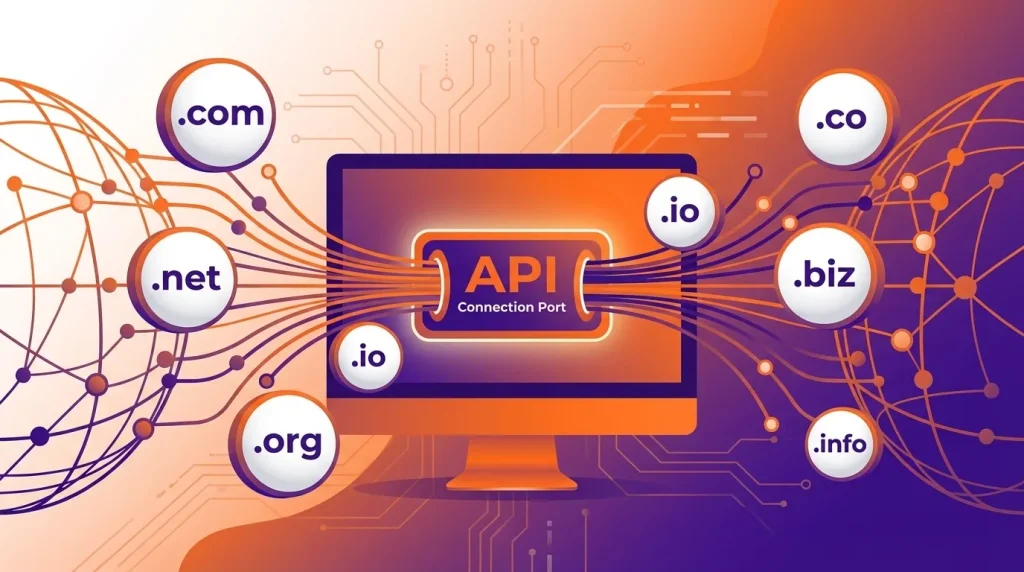
By utilizing a domain reseller API, you can embed a domain search bar directly into your agency’s storefront. When clients search for and purchase a domain, the API silently registers the domain at wholesale pricing, charges the retail price you dictate, and places the domain immediately into the client’s dashboard.
White Label Email Hosting & Enterprise Security
Business owners prioritize communication and data security above all else. Providing these services natively separates a professional agency from a basic web designer.
Branded Webmail for Your Customers
A comprehensive white label email hosting reseller environment allows your clients to create @theirbusiness.com email addresses. They log into a webmail dashboard (like Roundcube or Horde) that carries your branding, not the parent host’s logo.
Securing the Network with SSL/TLS
Google mandates secure connections for SEO ranking. You must provide SSL / TLS (Secure Sockets Layer / Transport Layer Security) certificates. The best reseller programs automate this process via Let’s Encrypt or AutoSSL, deploying a free, mathematically secure cryptographic certificate to every domain you host the second the account is provisioned.

Automating Your Recurring Revenue Stream
Scaling to hundreds of clients is impossible if you manually configure servers and chase unpaid invoices. You must rely on out-of-the-box automation.
WHM vs. WHMCS: The Engines of Your Business
To operate efficiently, you must understand the difference between the two core management platforms:
- WHM (Web Host Manager): This is your master server dashboard. You use WHM to define your hosting packages (e.g., allocating 10GB of NVMe storage to a “Basic” plan) and suspend accounts.
- WHMCS (Web Host Manager Complete Solution): This is your billing and automation software. As outlined in the WHMCS documentation, this platform acts as your storefront, support ticketing system, and automated cashier.
WHM vs. WHMCS Quick Comparison
| Feature | WHM (Web Host Manager) | WHMCS (Web Host Manager Complete Solution) |
| Primary Role | The Master Server Dashboard | The Billing & Automation Software |
| Business Function | Backend server management and resource allocation. | Front-end client management, storefront, and cashier. |
| Key Tasks | • Define custom hosting packages • Allocate NVMe storage & bandwidth • Create or suspend cPanel accounts | • Automate recurring invoicing • Provision new accounts instantly upon payment • Manage customer support tickets |
| The Analogy | The “Engine Room” of your agency. | The “Storefront & Cash Register” of your agency. |
The Full SaaS Stack: cPanel, WHM Addon Tools, and What Your Clients Actually Experience
Most agency owners stop at understanding WHM and WHMCS as two separate tools. That thinking leaves money on the table. The real competitive advantage comes from understanding how cPanel, WHM addon tools, and WHMCS layer together into a complete SaaS product — one that your clients experience as entirely yours.
Here is what that stack actually looks like in practice.
WHM is your server control room. But raw WHM alone only allocates disk space and creates accounts. The moment you activate the right WHM addon tools, you transform it into a fully managed, client-ready environment. The most critical addons for a white-label reseller operation include:
- Softaculous: A one-click application installer your clients use to deploy WordPress, Joomla, or Magento in under 60 seconds — branded inside their cPanel dashboard with no external branding visible.
- JetBackup: Automated, scheduled backup management. When a client accidentally deletes a file at 2 AM, they restore it themselves through their cPanel interface without raising a support ticket.
- ImunifyAV / Imunify360: Server-level malware scanning and intrusion detection running silently in the background. This is the layer that lets you honestly market “enterprise-grade security” to your clients.
- Attracta SEO Tools (or similar): Some reseller environments include SEO sitemap and submission tools directly inside cPanel — a genuine value-add your clients notice on their first login.
This is where white-label hosting crosses into SaaS territory. When your client logs into their cPanel dashboard and sees your logo, installs WordPress with one click via Softaculous, receives automated backup notifications from JetBackup, and gets a security scan report from ImunifyAV — they are not experiencing “hosting.” They are experiencing a branded software product that you built and operate. That perception is exactly what justifies your pricing premium over generic shared hosting.
WHMCS completes the SaaS illusion. From the outside, your client’s journey looks like this: they visit your website, choose a plan, pay via Stripe or PayPal, receive a branded welcome email, and log into a fully configured cPanel account — all within minutes, all under your brand. WHMCS is the automation engine making each of those steps invisible and instantaneous. The combination of cPanel’s client-facing dashboard, WHM’s addon tool ecosystem, and WHMCS’s billing automation is what separates a professionally run white-label hosting business from someone simply reselling disk space.
One practical note: not every reseller provider activates the full addon library by default. Before committing to a provider, confirm exactly which WHM addon tools are included at the reseller level — specifically Softaculous, JetBackup, and an active security layer like Imunify. These three addons alone eliminate the majority of day-to-day client support requests, directly protecting your margins and your time.

Out-of-the-Box Automation & Client Account Provisioning
White label hosting with WHMCS is the holy grail for digital agencies. When a customer purchases a hosting package on your website via Stripe or PayPal, WHMCS automatically verifies the payment, talks to WHM via an API API hook, creates the cPanel account, registers the domain, and emails the login credentials to the client within seconds. You generate revenue while you sleep.
The Truth About “Free” Reseller Hosting & Legacy Alternatives
The market is flooded with offers for “free” reseller accounts or massively discounted introductory rates from legacy hosts. If you are building a serious agency, here is the technical and financial reality:
- The GoDaddy Comparison Gap: Many agencies search for GoDaddy reseller alternatives because legacy hosts often lack true 100% white-label capabilities (exposing the parent brand in the checkout flow) and rely on older, slower server hardware.
- The Renewal Spike Trap: Legacy hosts may charge $15/month for year one, but impose a 300% renewal spike in year two. This destroys your profit margins because you cannot legally force your existing clients to pay 300% more overnight.
- The “Free” Illusion: Truly free reseller hosting does not include WHMCS, isolates your clients on slow, overcrowded servers, and provides zero migration support.
BIsup guarantees flat, transparent USD pricing upon renewal, protecting your agency’s financial forecasting.
Who This Is NOT For
We believe in absolute transparency. White-label reseller hosting is NOT for:
- Single-site owners: If you just want to host your own personal blog, standard shared hosting is significantly cheaper.
- Enterprise SaaS Application Developers: If you are building the next Netflix or a massive, custom-coded web application requiring root server access and dedicated CPU threads, you need an Unmanaged Cloud VPS, not a reseller environment.
Common Questions About White-Label Reseller Hosting
What is the difference between normal reseller hosting and white-label hosting?
Normal reseller hosting may expose the parent company’s brand on the billing portal, default server hostnames, or IP lookups. True white-label hosting uses custom nameservers, anonymous hostnames, and unbranded control panels so the parent company remains 100% invisible to your clients.
How do I sell domain names under my own brand?
By integrating a white-label domain reseller API directly into an automation platform like WHMCS. This allows your clients to search for, purchase, and manage TLDs (like .com or .net) directly from your branded storefront.
Will my web design clients know I am using a third-party host?
No. With a properly configured white-label setup, your clients will only ever see your agency’s logo inside their cPanel dashboard, your custom nameservers attached to their domains, and your branded billing emails.
How do I automate billing for my web hosting clients?
You can achieve out-of-the-box automation using WHMCS. It connects to your preferred payment gateways (like Stripe) to automatically generate recurring invoices, suspend overdue accounts, and provision new cPanel setups instantly upon payment confirmation.
How to start a white-label hosting business without managing servers?
You partner with a premium infrastructure provider. You purchase a reseller package where the parent provider manages the physical hardware, network routing, and server-level security, allowing you to focus exclusively on marketing, sales, and client relationships.
Launch your 100% white-label hosting business today with BIsup’s pure NVMe infrastructure. View US Reseller Hosting Packages & Pricing