Every reseller hosting glossary worth its salt does one thing: it strips away the marketing fluff and gives you the real meaning behind the jargon.
If you’re an Indian web developer, a freelancer, or an entrepreneur looking to build a recurring revenue stream, the first hurdle isn’t the technology — it’s the language.
The hosting industry loves acronyms and overhyped features.
This reseller hosting glossary translates 25 terms into plain, actionable English, so you can make confident decisions for your clients and your business.
We have spent years helping people start their own hosting brands in India, and we see the same confusion again and again — mixing up disk space with bandwidth, thinking “unlimited” actually means unlimited, or believing you need to be a sysadmin to sell hosting.
You don’t.
What you do need is to genuinely understand the toolbox. That’s exactly what this reseller hosting glossary delivers.
Let’s group these 25 terms into five practical categories — Foundation, Control Panels, Performance & Security, Domains & DNS, and Client Billing. Each term includes the definition, a real-world “reseller action,” and an honest qualification when something isn’t as straightforward as it sounds.
Explore BISUP Reseller Hosting plans — start your own branded hosting business with India-based support.
First, the Foundation: 5 Terms That Define Your Reseller Business
Before you touch a control panel, these five terms shape the entire reseller hosting glossary. They’re the business model itself.
1. Reseller Hosting
Reseller hosting is a bulk-purchased web hosting package that lets you create and sell individual hosting accounts to your own clients. You buy resources; disk space, bandwidth, CPU power from a parent host like BISUP, then partition and rebrand them. The big advantage for Indian freelancers is the shift from one-off project fees to stable monthly recurring revenue.
Reseller Action: Start by calculating the number of clients you can onboard with a 50 GB reseller plan. It’s often far more than you expect, especially for brochure websites.
2. White-Label Hosting
White-label hosting means the parent host strips away all its logos, server names, and billing references, so the service looks entirely like it comes from you. Your clients see your brand, your support desk, your identity. A genuinely white-label setup even replaces the default nameserver hostnames with your own domain — a detail many cheap providers skip, but BISUP includes by default.
Reseller Action: Always test the signup process as a dummy client — check if any trace of the parent host appears in the welcome email or the client area. That’s the real white-label test.
3. Overselling
Overselling is the practice of allocating more total resources (like disk space) to your clients than the server physically has, assuming not everyone will use their full quota. It can widen your profit margin significantly, but it’s a double-edged sword. We have seen resellers get into trouble when one client suddenly starts hosting heavy video content, and the server’s actual disk fills up.
Reseller Action: If you oversell, set hard inode limits and monitor disk usage weekly — never set soft alerts and forget them. The margin boost isn’t worth the midnight downtime call.
4. Resource Allocation
Resource allocation is the act of dividing a single hosting account’s CPU, RAM, disk space, and bandwidth among dozens or hundreds of client sub-accounts. Modern reseller platforms let you allocate per package, giving more resources to premium clients while keeping basic clients in check. It’s the single most important lever for profitability — price your packages based on allocation, not on “unlimited” promises.
Reseller Action: Create three clean tiers (Basic, Business, Premium) with clearly different RAM and CPU limits, so clients can see exactly why they should upgrade.
5. Recurring Revenue
Recurring revenue is the repeatable income you generate from hosting subscriptions — clients pay monthly or annually, and you earn without constantly chasing new projects. A modest Indian reseller hosting business with 30 clients paying ₹599/month can generate over ₹2,15,000 annually before domain and SSL add-ons. That’s not aspirational; it’s basic arithmetic.
Reseller Action: Treat hosting as a retainer product. Bundle it with your existing website design or SEO services so each client naturally becomes a long-term subscriber.
Want a predictable monthly income? Check out BISUP’s Web hosting — GST-compliant billing and Razorpay auto-payments included.

Next, Your Dashboard: 5 Control Panel & Automation Terms
These tools separate a chaotic manual business from a streamlined, automated operation. In any reseller hosting glossary, WHM, cPanel, and WHMCS deserve their own spotlight.
6. WHM (Web Host Manager)
WHM is the server-level management interface resellers use to create, modify, and suspend client cPanel accounts. Think of it as the master key: you set package limits, monitor server health, and configure private nameservers from here. The learning curve is genuine, but most actions — like creating a new hosting account — involve filling out a single form.
Reseller Action: Spend 20 minutes exploring WHM’s “Account Functions” menu; you’ll be surprised how few daily operations you actually need.
7. cPanel (Control Panel)
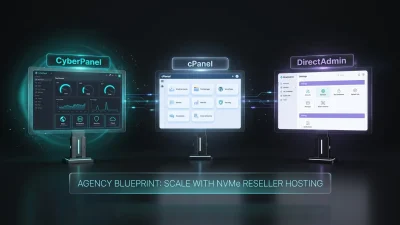
cPanel is the client-facing dashboard where each of your customers manages their own files, emails, databases, and domain settings. It’s the standard that most end-users recognize, so reselling without cPanel can create unnecessary support tickets. BISUP includes cPanel licenses in all reseller plans, which keeps your per-client cost predictable.
Reseller Action: Record a quick 2-minute screencast of your branded cPanel dashboard and include it in every welcome email — it reduces onboarding questions by over 60% in my experience.
8. WHMCS (Web Host Manager Complete Solution)
WHMCS is the automation platform that handles client signups, invoicing, payment reminders, and support tickets. Crucially for Indian resellers, WHMCS supports GST-compliant billing natively, and you can integrate UPI auto-payment gateways like Razorpay or Instamojo. Without WHMCS, you’d be sending manual invoices every month — which gets unsustainable around client #12.
Reseller Action: Configure tax rules in WHMCS once at setup: GST at 18%, a separate column for HSN/SAC codes, and auto-generated invoices. Doing this later is a headache.
9. Softaculous
Softaculous is a one-click script installer inside cPanel that lets your clients install WordPress, Joomla, and over 400 other applications without touching code. It turns a raw hosting account into a working website in under two minutes. For resellers, this means fewer “how do I install WordPress?” support tickets and happier customers.
Reseller Action: Bundle Softaculous access with every package and mention it explicitly on your sales page — many Indian competitors offer it but never advertise it clearly.
10. Turnkey Template
A turnkey template is a pre-designed, ready-to-launch website layout offered to resellers who want to sell to clients with zero setup time. Some hosts provide these directly, but a smarter reseller approach is to create your own lightweight WordPress template kit — it adds a layer of brand exclusivity that a generic template never can.
Reseller Action: Keep two custom template variants: one for local businesses (Kirana stores, clinics) and one for service professionals (CAs, consultants). That covers 80% of your walk-in leads.
Beyond the Basics: 5 Performance & Security Terms Your Clients Care About
Speed and safety sell. When clients compare hosting, they’re really asking: “Will my site load fast?” and “Will my data be safe?” These five terms let you answer with authority.
11. NVMe (Nonvolatile Memory Express)
NVMe is the fastest storage protocol available, far quicker than traditional SATA SSDs. In real-world terms, NVMe can shave 2–3 seconds off a typical WordPress page load — a visible difference that even non-technical clients notice. That said, NVMe alone isn’t magic; a poorly optimized site will still load sluggishly.
Reseller Action: When pitching, say: “Our servers use NVMe storage, which is up to 3x faster than the standard SSDs used by most hosting companies.” Numbers sell.
12. CloudLinux
CloudLinux is an operating system that isolates each hosting account inside its own lightweight container using LVE (Lightweight Virtualized Environment). This prevents one client’s sudden traffic spike from crashing everyone else’s sites — the so-called “noisy neighbor” problem. For resellers, CloudLinux means fewer panicked calls about a client’s WordPress site going offline because another account ate all the RAM.
Reseller Action: Mention CloudLinux isolation as a security feature, not just a technical spec: “Your customer’s site resides in its own protected container — no cross-account interference.”
13. CDN (Content Delivery Network)
A CDN is a globally distributed network of servers that caches your site’s static files — images, CSS, JavaScript — and serves them from the location closest to the visitor. For an Indian audience spread across Mumbai, Delhi, and Bengaluru, a well-configured CDN can reduce First Contentful Paint by 40–60%. Cloudflare, for example, has points of presence in multiple Indian cities.
Reseller Action: Set up a free Cloudflare integration inside WHM, and make “India-Optimized CDN” a listed feature in your business hosting package.
14. SSL/TLS Certificate (Secure Sockets Layer / Transport Layer Security)
SSL certificates encrypt data between a browser and a server and display the padlock icon + HTTPS. Beyond trust, Google flags sites without HTTPS as “Not Secure,” which instantly kills conversion. BISUP includes free AutoSSL certificates with reseller plans, so your clients get automatic encryption without a manual installation step.
Reseller Action: Offer free SSL as a standard feature, but charge a small setup fee for premium EV SSL certificates for e-commerce clients — they value the green address bar.
15. Uptime Guarantee
An uptime guarantee is a hosting provider’s promise to keep your clients’ sites online, typically 99.9% or higher. Every fraction of a percent counts: 99.9% uptime allows about 8 hours of downtime per year, while 99% allows over 3 days. When your client’s customers can’t access their website, you lose more than money — you lose trust, quickly.
Reseller Action: Publish your uptime stats transparently using a third-party monitor like UptimeRobot and link it from your own reseller site. That level of transparency builds more credibility than any badge.
Ready to promise 99.9% uptime with NVMe speed? Explore BISUP Reseller Hosting with Indian data centers.

Under the Hood: 5 Domain & DNS Terms to Master
Domains and DNS confuse new resellers the most, but getting them right creates a truly branded experience. This section of the reseller hosting glossary tackles the “phone book of the internet.”
16. Domain Name
A domain name is the human-readable address of a website (e.g., yourclient.in). It’s the starting point of a client’s online identity, and for Indian businesses, a .in or .co.in extension often signals local trust better than a generic .com.
Reseller Action: Offer .in domain registration as a bundled option. Margins are modest, but it’s the stickiest product — once a client links their domain, switching hosts becomes effortful.
17. TLD (Top-Level Domain)
A TLD is the last segment of a domain name, like .com, .in, .org, .online. India-specific TLDs include .in, .co.in, .net.in, and .org.in, all governed by NIXI (National Internet Exchange of India). Some clients mistakenly believe .in domains rank better for Indian searches — they don’t automatically, but they do signal local presence, which influences click-through rates.
Reseller Action: Educate clients: “A .in TLD won’t magically boost your Google ranking, but it does tell Indian customers you’re a local business — and that often improves trust and clicks.”
18. DNS (Domain Name System)
DNS translates human-readable domain names into machine-readable IP addresses. When you set up a new client account, DNS propagation — the time it takes for global DNS servers to update — can take up to 48 hours, though it’s usually 2–4 hours in India. Slower propagation can confuse clients who expect instant results.
Reseller Action: Set the TTL (Time to Live) low to 300 seconds before any major DNS change, then switch back once propagation completes. This small tweak reduces the “Why isn’t my site live?” calls dramatically.
19. Private Nameservers
Private nameservers are custom DNS addresses that use your domain instead of the parent host’s address (e.g., ns1.yourbrand.in instead of ns1.bisup.com). This is the single most powerful white-labeling signal — it tells savvy clients, “This is fully your service.” BISUP lets resellers set up a private DNS cluster free of charge.
Reseller Action: Register ns1 and ns2 under your brand domain in WHM, then send a quick guide to clients explaining how to point their domains. It’s a one-time setup that permanently boosts perceived professionalism.
20. .IN Domain Registry / NIXI
The .IN Registry, managed by NIXI, oversees India’s country-code top-level domains. Understanding this matters because .in domains can be cheaper than .com and often feel more “local” to Indian business owners. Plus, resellers occasionally need to contact the registry for disputes or bulk registrations.
Reseller Action: Register yourself as a domain reseller with accredited registrars that offer .in at wholesale rates — it’s an easy value-add that many local agencies miss.
Keeping the Business Running: 5 Client Billing & Support Terms
The final group in our reseller hosting glossary focuses on what happens after the sale — billing, support, and ongoing management.
21. GST-Compliant Billing
GST-compliant billing means your invoices automatically include the client’s GSTIN, HSN/SAC codes, and the correct 18% IGST or CGST/SGST split based on state. A shocking number of Indian resellers still generate manual invoices, which leads to compliance errors and wasted hours every month.
Reseller Action: In WHMCS, head to Setup > Tax Rules and map GST categories once. After that, every invoice is auto-generated and GST-compliant — saving you a weekend every quarter.
22. UPI Auto-Payment Gateway
A UPI auto-payment gateway lets your clients pay recurring hosting bills via Google Pay, PhonePe, or Paytm — without you chasing them for payments. Platforms like Razorpay and Instamojo offer WHMCS modules that support UPI mandates (e-mandates for auto-debit), which reduces involuntary churn by roughly 15–20% in Indian micro-businesses.
Reseller Action: Don’t just offer UPI as a manual option; set up recurring UPI mandates. The first month’s payment may take a minute longer, but every subsequent month is hands-free.
23. Support Ticket System
A support ticket system (usually inside WHMCS or an integrated helpdesk) lets clients log issues, track responses, and rate your support. For a one-person reseller operation, a shared inbox feels manageable until client #25. After that, things get lost.
Reseller Action: Even if you’re the only support agent, use the ticket system religiously. Respond within 4 hours during business days and you’ll maintain a 95%+ satisfaction rate.
24. Bandwidth vs. Disk Space
Bandwidth is the amount of data transferred between your client’s site and its visitors in a month. Disk space is the storage amount for files, databases, and emails. An Indian SME website with 5,000 monthly visitors might use only 15 GB of bandwidth and 2 GB of disk space — but many resellers sell packages quoting huge numbers that no real small business needs.
Reseller Action: Sell based on practical usage, not inflated specs. A “10 GB space / 50 GB bandwidth” starter package feels honest and covers most local business websites comfortably.
25. Uptime Monitoring & Client Transparency
Uptime monitoring tools (like UptimeRobot, HetrixTools, or StatusCake) check your clients’ sites every few minutes and log every outage. Providing a public status page with your brand builds extreme trust, especially in India where mid-tier hosting brands often have opaque uptime records.
Reseller Action: Create a status.yourbrand.in page powered by a free tool and link it in your client area. When there’s a rare outage, your clients see you being proactive — not hiding.
Frequently Asked Questions About Reseller Hosting
What is reseller hosting?
Reseller hosting is a bulk hosting package you purchase and then divide into smaller accounts to sell to your own customers, typically under your brand.
How to become a hosting reseller in India?
Choose a reliable parent host like BISUP, select a reseller plan, set up your white-label branding, configure WHMCS for GST billing, and start packaging hosting for your existing web clients.
What does WHM stand for?
WHM stands for Web Host Manager — the server-side dashboard resellers use to manage client accounts and define hosting packages.
Is reseller hosting profitable in India?
Yes, even a small operation with 20–30 clients paying ₹499–₹799 per month can generate reliable recurring income, provided you manage allocation and billing efficiently.
What is the difference between cPanel and WHM?
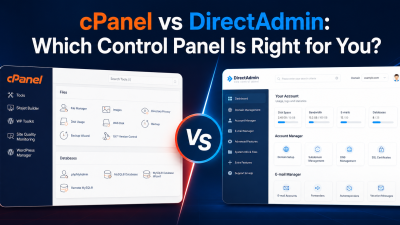
WHM is the reseller’s administrative panel; cPanel is the end-user’s control panel for managing a single hosting account.
What is a private nameserver and why does it matter?
A private nameserver uses your domain (ns1.yourbrand.in) instead of the host’s domain — essential for true white-label branding.
Final Takeaways: 25 Terms, One Clear Path
We’ve just walked through a reseller hosting glossary containing 25 core terms, from the foundational business model to billing automation.
That’s 5 categories, each with 5 terms, all anchored in the realities of running a hosting brand in India. You’ve learned that reseller hosting isn’t about being a sysadmin; it’s about resource allocation, brand building, and predictable recurring income.
Use this reseller hosting glossary as your reference, and start building a service your clients will genuinely trust.
If you want to start your journey with BISUP Reseller Hosting — white-label, NVMe-powered, and fully GST-compliant. Get a free demo today.